The CreatorSpace concept

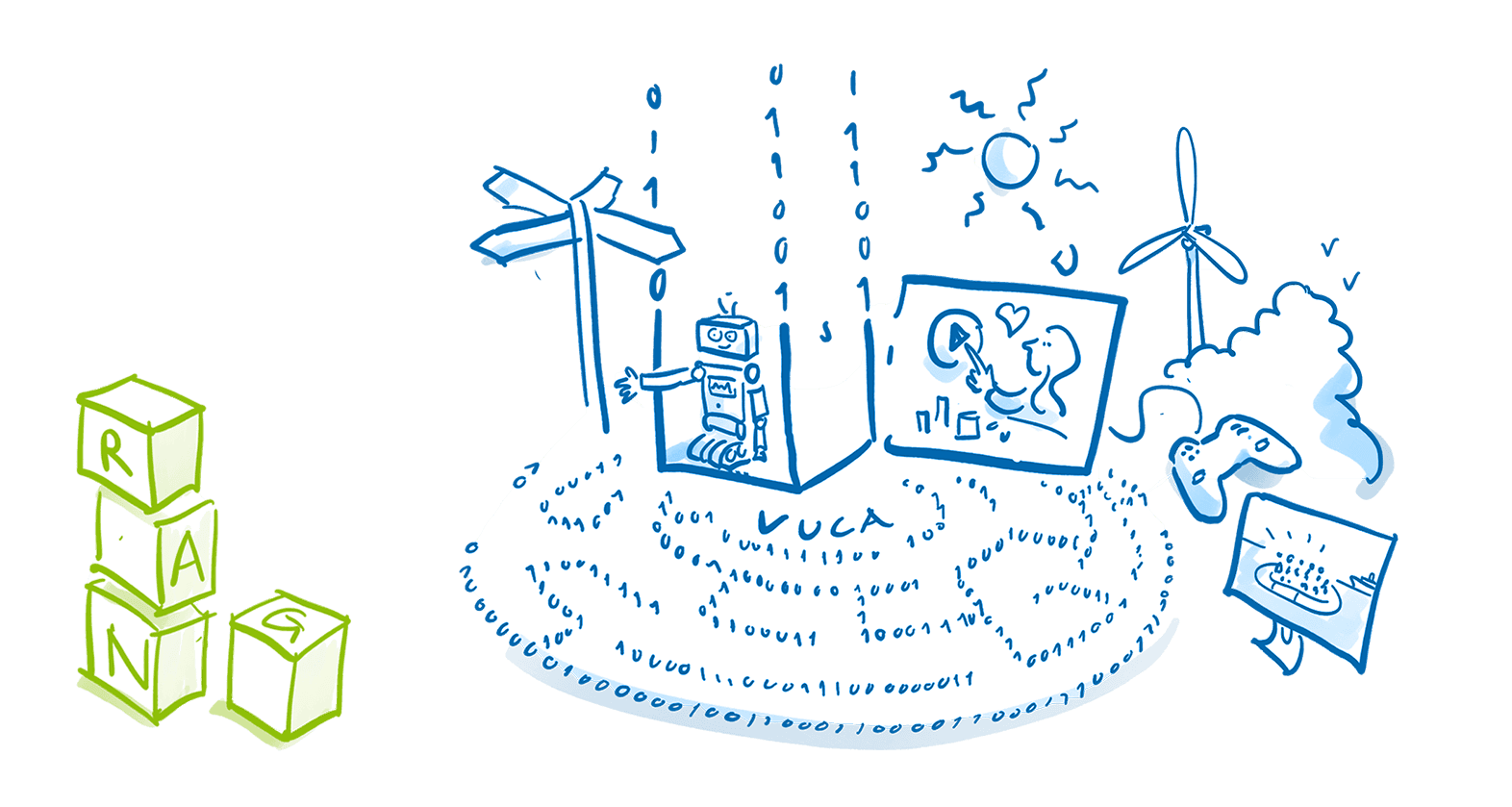
Our children are the creators of the future. They need an education that goes beyond acquiring traditional basic skills in reading, writing and arithmetic and enables them to meet the complex challenges of a highly dynamic VUCA world. This VUCA world is characterised by Volatility (disruptive change), Uncertainty, Complexity and Ambiguity. In this highly dynamic and highly complex VUCA world, the professional, cultural and societal challenges of future life are becoming increasingly difficult to define. Traditional basic skills such as reading, writing and arithmetic remain important in the VUCA world.
However, it is becoming increasingly clear that these basic skills are not enough for a successful and happy life in today's and tomorrow's world. Traditional basic skills need to be complemented by further competencies, attitudes and motivational orientations that enable children to respond appropriately to, and shape, current and future demands, some of which can barely be foreseen.
New basic skills in a VUCA world
Digital and media transformation presents a particular challenge, but also an opportunity: today's and tomorrow's world is permeated by digital technologies and new forms of media expression, opening up new areas of competence for foundational education. Children today need to learn to reflect on, analyse, use and shape the digital world. As primary school provides foundational education for all children, and developmental theory shows that key competencies and interests develop in middle childhood, this foundation of future skills must be secured from the first year of primary school, as called for by Germany's Standing Conference of the Ministers of Education and Cultural Affairs.
Childhood in a VUCA world


Volatility
Volatile
In a world shaped by digitalisation and AI, many children experience their parents' concerns about job security. The fear of losing a job creates an atmosphere of constant uncertainty and affects their mood and outlook for the future.

Uncertainty
Uncertainty
Children today are exposed across all media channels to news about global events such as climate change, pandemics and political unrest.

Complexity
Complexity
Using social media involves a complex mix of benefits and risks, including cyberbullying, self-esteem issues and the pressure to maintain an online presence.

Ambiguity
Ambiguity
Children today are exposed across all media channels to news about global events such as climate change, pandemics and political unrest.
Future Learning in primary education

Without fundamental reforms, primary education currently risks preparing children for yesterday's world rather than responding to new challenges. To prepare children better for the world of today and tomorrow, questions about the future need to be firmly embedded in primary education through Future Learning.
To achieve this kind of Future Learning in primary school, we need to rethink primary education from the ground up: tendencies to focus exclusively on reproducing traditional knowledge and acquiring traditional cultural skills need to be overcome. Children today also need to learn how to use digital technologies and media representations to learn, explore, create and communicate.
The ability to shape the future in the sense of Education for Sustainable Development (ESD), to help create a planet that remains habitable for their grandchildren, and the inclusion of the Sustainable Development Goals are also crucial. Developing future skills therefore goes beyond handling digital tools. It is about giving children opportunities to use digital and media representations to critically reflect on, analyse, use and shape their constantly changing world. In view of the dynamic processes of change in our society, it is particularly important not only to continuously develop the aims of primary education, but also for children to further develop their self-directed learning competencies in light of the importance of lifelong learning.
Select a number to explore the concept.
Read all seven topics as text
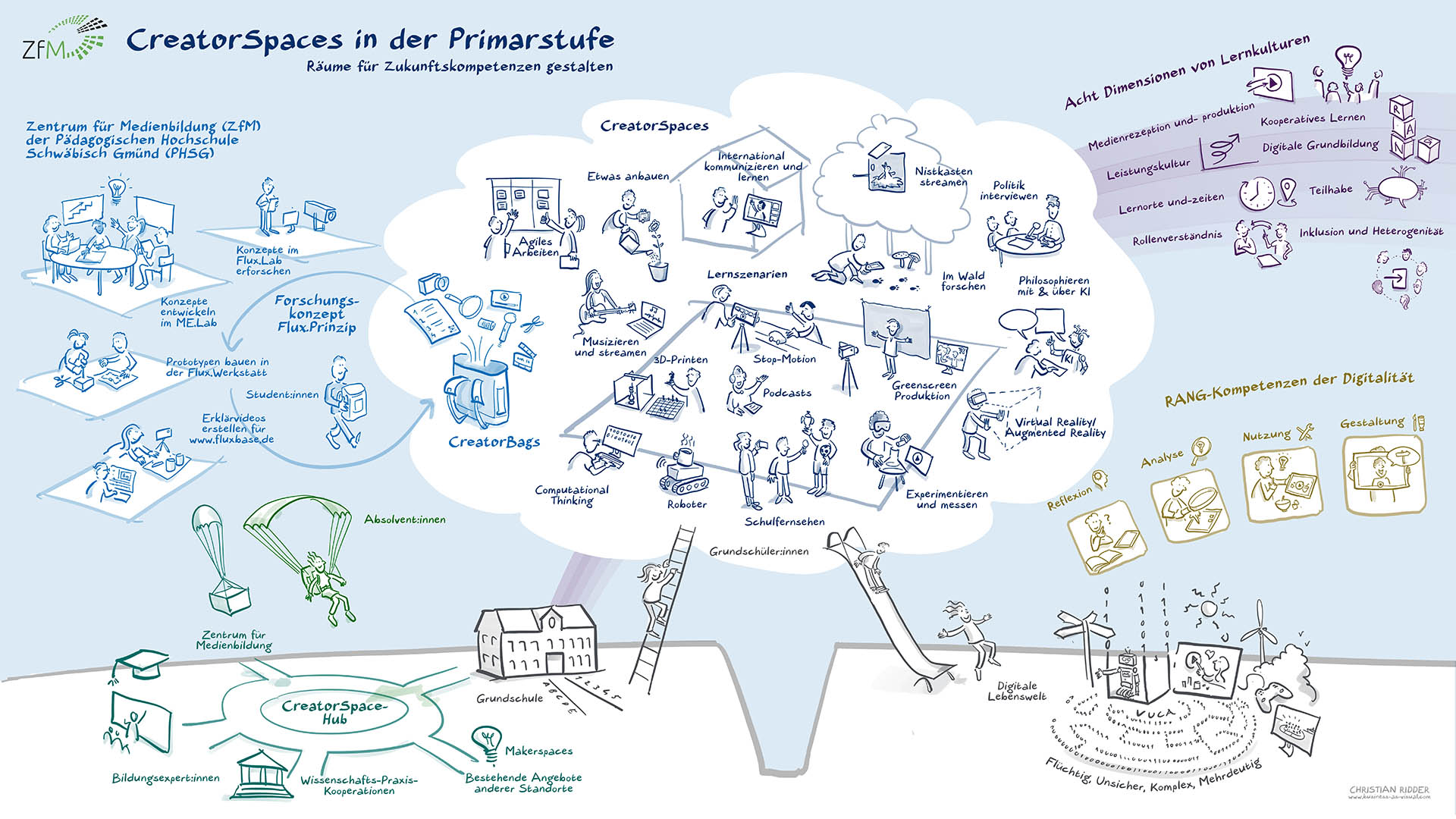
1. CreatorSpaces
CreatorSpaces are opportunities offered in particular places and periods of time (spaces), where children become pioneers in shaping the future. In learning scenarios tested through research, they experience new technologies as tools for creative design, communication and exploration.
2. Learning cultures
Learning cultures in digitality continue to develop through CreatorSpaces. This gives rise, for example, to new forms of media communication, a changing understanding of the roles of learners and teachers, new structures of place and time, and changing forms of assessment.
3. Research and development
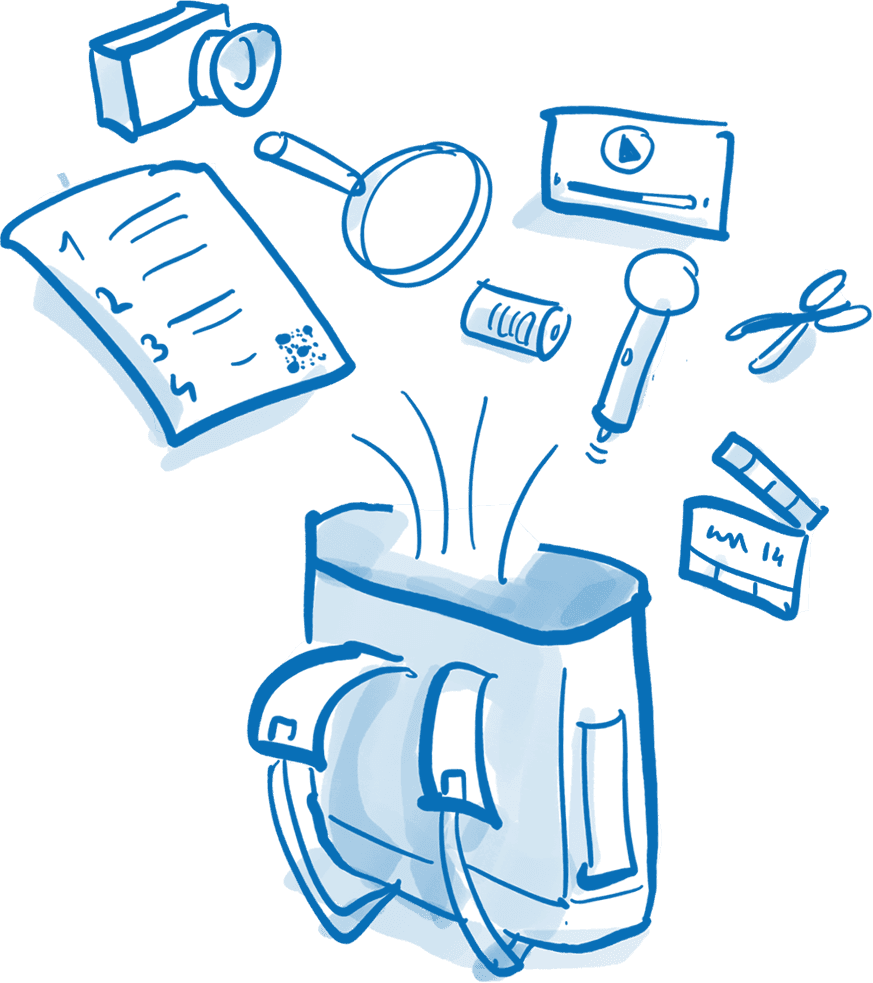
Students and teaching staff at the Center for Media Education at the University of Education Schwäbisch Gmünd jointly develop, research and test the learning scenarios for CreatorSpaces in practice. These practical trials lead to further development of the concepts, which are then prepared for use in practice as video training and CreatorBags. Concept development is supported by the media resources of the ME.Lab at the University of Education Schwäbisch Gmünd and the support services of the Flux.Werkstatt.
4. RANG competencies
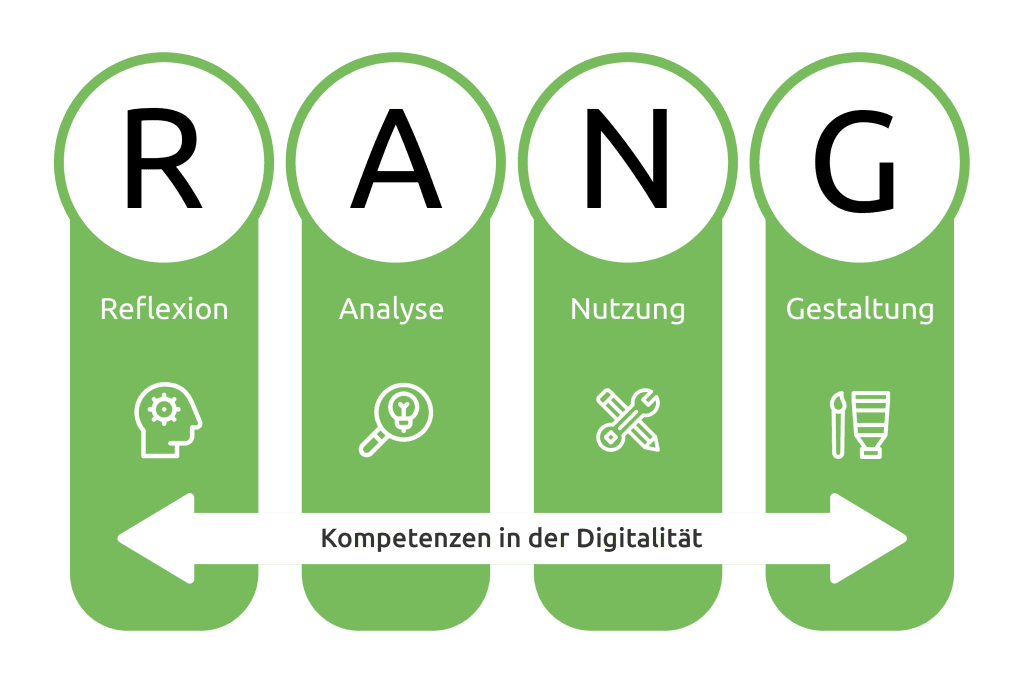
Learning in CreatorSpaces promotes the development of RANG competencies for shaping the digital world thoughtfully and responsibly.
5. A changing world
The world is constantly changing. These processes of change bring both risks and opportunities for children as they grow up. Primary schools address this changing world of children only in part. At present, children in primary school are often inadequately prepared for their future.
6. The CreatorSpace network
The CreatorSpace concepts are further developed through a participatory process in cooperation with a range of practice partners. With CreatorSpaces in primary education, we are jointly building an educational landscape that enables young people not only to find their way in a rapidly changing world, but also to help shape it actively.
7. Graduates and Digital Leaders
Graduates of the University of Education Schwäbisch Gmünd use the professional competencies they have acquired as future digital leaders to drive innovation in primary schools.
English text for the CreatorSpace diagram
- CreatorSpaces in der Primarstufe
- CreatorSpaces in primary education
- Räume für Zukunftskompetenzen gestalten
- Creating spaces for future skills
- Zentrum für Medienbildung (ZfM) der Pädagogischen Hochschule Schwäbisch Gmünd (PHSG)
- Center for Media Education (ZfM) at the University of Education Schwäbisch Gmünd (PHSG)
- Konzepte entwickeln im ME.Lab
- Developing concepts in the ME.Lab
- Konzepte im Flux.Lab erforschen
- Researching concepts in the Flux.Lab
- Prototypen bauen in der Flux.Werkstatt
- Building prototypes in the Flux.Werkstatt
- Erklärvideos erstellen für www.fluxbase.de
- Creating explanatory videos for www.fluxbase.de
- Forschungskonzept Flux.Prinzip
- Research concept: Flux.Prinzip
- Student:innen
- Students
- CreatorBags
- CreatorBags
- CreatorSpaces
- CreatorSpaces
- Lernszenarien
- Learning scenarios
- Agiles Arbeiten
- Agile working
- Etwas anbauen
- Growing plants
- International kommunizieren und lernen
- Communicating and learning internationally
- Nistkästen streamen
- Live-streaming nest boxes
- Politik interviewen
- Interviewing politicians
- Im Wald forschen
- Exploring the forest
- Philosophieren mit & über KI
- Philosophising with and about AI
- Musizieren und streamen
- Making and streaming music
- 3D-Printen
- 3D printing
- Stop-Motion
- Stop motion
- Greenscreen Produktion
- Green screen production
- Podcasts
- Podcasts
- Virtual Reality / Augmented Reality
- Virtual reality / Augmented reality
- Computational Thinking
- Computational thinking
- Roboter
- Robots
- Schulfernsehen
- School television
- Experimentieren und messen
- Experimenting and measuring
- Grundschüler:innen
- Primary school children
- Acht Dimensionen von Lernkulturen
- Eight dimensions of learning cultures
- Medienrezeption und -produktion
- Media reception and production
- Kooperatives Lernen
- Cooperative learning
- Leistungskultur
- Assessment culture
- Digitale Grundbildung
- Foundational digital education
- Lernorte und -zeiten
- Learning spaces and times
- Teilhabe
- Participation
- Rollenverständnis
- Understanding of roles
- Inklusion und Heterogenität
- Inclusion and diversity
- RANG-Kompetenzen der Digitalität
- RANG competencies in digitality
- Reflexion
- Reflection
- Analyse
- Analysis
- Nutzung
- Use
- Gestaltung
- Creation
- Absolvent:innen
- Graduates
- Zentrum für Medienbildung
- Center for Media Education
- CreatorSpace-Hub
- CreatorSpace Hub
- Bildungsexpert:innen
- Education experts
- Wissenschafts-Praxis-Kooperationen
- Research–practice partnerships
- Grundschule
- Primary school
- Makerspaces
- MakerSpaces
- Bestehende Angebote anderer Standorte
- Existing provision at other locations
- Digitale Lebenswelt
- Digital world
- Flüchtig, Unsicher, Komplex, Mehrdeutig
- Volatile, uncertain, complex, ambiguous
CreatorSpaces in primary education
By opening CreatorSpaces in schools, we want to provide a space for this kind of Future Learning in primary education. CreatorSpaces can be dedicated rooms, but also periods of time in which children have the opportunity to develop future skills with educational guidance while pursuing and further cultivating their own interests and talents. Carefully planned, stimulating learning environments give children the opportunity to develop and realise their own ideas. In these CreatorSpaces, children have access to a wide range of digital technologies and platforms that enable them to make full use of their creativity and potential for innovation. The teaching approaches draw on learning cultures in digitality (Irion & Knoblauch 2021) and the RANG model of digitality (Irion, Peschel & Schmeinck 2023). A fundamental principle of CreatorSpaces is that children learn to experience the digital world not only as consumers, but as active creators.
A central aim is also to enable children to critically question media content, evaluate it ethically and use it for their own personal development as well as to act responsibly in society. They acquire competencies that enable them to reflect critically on the use of digital media, use it responsibly and create their own digital content. These abilities are crucial for succeeding in an increasingly complex world and bringing about positive change.
Examples of activities in a CreatorSpace:
- Photo and video production (green screen, stop motion, animation, …)
- Audio and podcast production
- Developing analogue and digital games
- Product design and creation with a 3D printer and laser cutter
- and many more!
Key models
The RANG competence dimensions
 Irion, Peschel & Schmeinck 2023 (🔗 View publication)
English text for the RANG model
- R – Reflexion
- R – Reflection
- A – Analyse
- A – Analysis
- N – Nutzung
- N – Use
- G – Gestaltung
- G – Creation
- Kompetenzen in der Digitalität
- Competencies in digitality
Learning cultures in digitality
Irion & Knoblauch 2021 (🔗 View publication)
DPaCK: Modelling prerequisites in teachers' professional knowledge
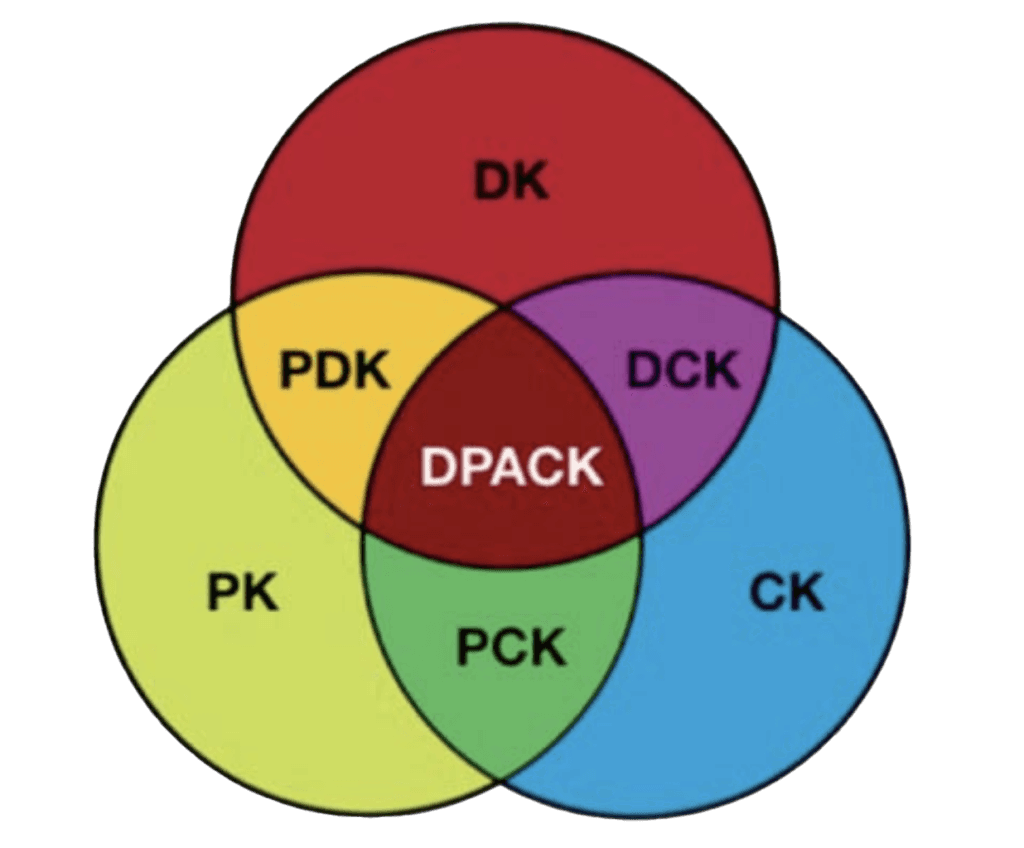
Huwer, Irion, Kuntze, Schaal & Thyssen 2019 (🔗 View publication)
References
- Irion, T., Peschel, M., & Schmeinck, D. (2023). Grundlegende Bildung in der Digitalität. Was müssen Kinder heute angesichts des digitalen Wandels lernen? In T. Irion, M. Peschel, & D. Schmeinck (Eds.), Grundschule und Digitalität. Grundlagen, Herausforderungen, Praxisbeispiele. Grundschulverband. https://www.pedocs.de/frontdoor.php?source_opus=25820
- Irion, T., & Knoblauch, V. (2021). Lernkulturen in der Digitalität. Von der Buchschule zum zeitgemäßen Lebens- und Lernraum im 21. Jahrhundert. In M. Peschel (Ed.), Kinder lernen Zukunft: Didaktik der Lernkulturen. Grundschulverband e.V.
- Huwer, J., Irion, T., Kuntze, S., Schaal, S., & Thyssen, C. (2019). Vom TPaCK zu DPaCK – Digitalisierung im Unterricht erfordert mehr als technisches Wissen. MNU journal, Digitalisierung und Digitalität im MINT-Unterricht(05.2019), 358–364.
Your contact:
Anna Meder
Our aim is to build a network that enables teachers and children to visit a CreatorSpace in their local area. We are therefore looking for (institutional) partners who are also interested in learning from one another.
If you already have a MakerSpace or CreatorSpace, or could imagine transforming a room in your school for this purpose, please get in touch.
Get involved!
Stay informed
Subscribe to the newsletter
Be the first to hear about CreatorSpaces news and much more!